Uncategorized

Uncategorized

Traditional Marketing vs. Digital Marketing: Which Works Better?

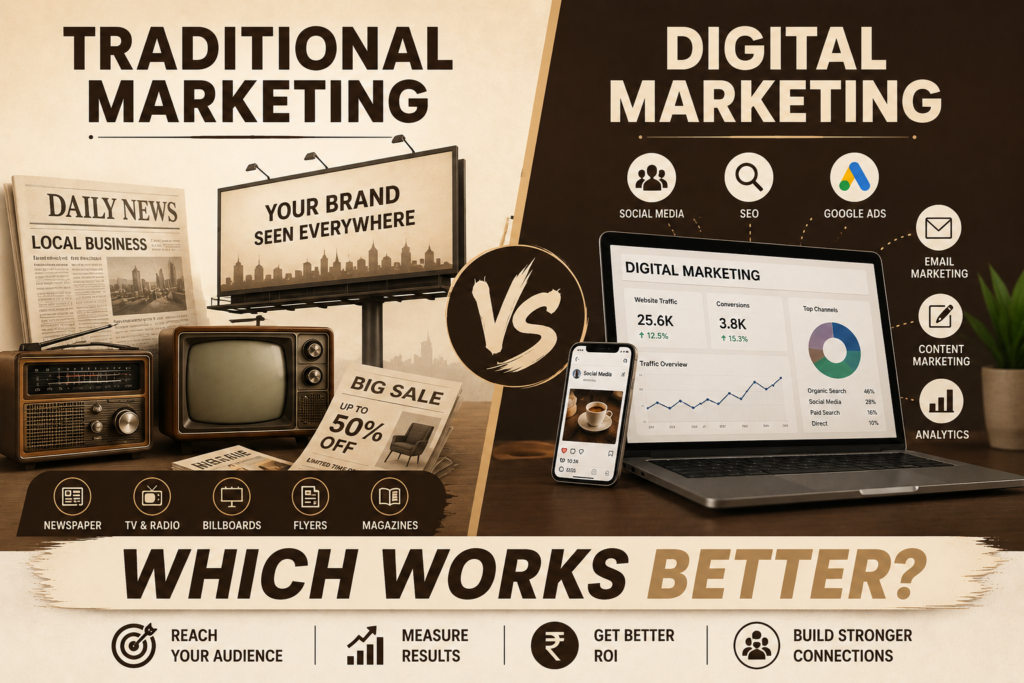
Traditional Marketing vs. Digital Marketing: Which Works Better? In today’s competitive business landscape, marketing plays a crucial role in helping businesses reach their target audience and increase sales. As technology continues to evolve, businesses are often faced with an important question: Should they invest in traditional marketing or digital marketing? Both marketing methods have their strengths and weaknesses. While traditional marketing has been trusted for decades, digital marketing has transformed the way businesses connect with customers. Understanding the differences between these two approaches can help you choose the right strategy for your business. What Is Traditional Marketing Traditional marketing refers to offline methods of promoting products and services. These methods have been used for many years and include television commercials, radio advertisements, newspaper ads, magazines, billboards, brochures, flyers, and direct mail. Traditional marketing is particularly effective for reaching local audiences and older demographics who consume more offline media. Large brands often use television and outdoor advertising to increase brand awareness and establish credibility. Advantages of Traditional Marketing 1. Builds Brand Recognition Television commercials, newspaper advertisements, and billboards can create strong brand awareness among a broad audience. Repeated exposure helps people remember your business. 2. High Credibility Many consumers still consider advertisements in newspapers, magazines, and television to be more trustworthy than online ads. 3. Effective for Local Promotion Businesses such as restaurants, retail stores, and local service providers can benefit from flyers, banners, and newspaper advertisements to attract nearby customers. 4. Long-Lasting Impact Printed materials like brochures and magazines often stay with customers for weeks or months, providing repeated exposure to your brand. Disadvantages of Traditional Marketing Higher advertising costs, Difficult to measure campaign performance, Limited audience targeting, , ,One-way communication with customers, Less flexibility to update campaigns once published. What Is Digital Marketing? Digital marketing uses online platforms and digital technologies to promote products and services. It includes search engine optimization (SEO), social media marketing, content marketing, email marketing, Google Ads, pay-per-click advertising, influencer marketing, and website marketing. With billions of people using the internet daily, digital marketing has become one of the most effective ways for businesses to reach potential customers. Advantages of Digital Marketing 1. Cost-Effective Digital marketing campaigns can fit almost any budget. Even small businesses can compete with larger brands through smart strategies and targeted advertising. 2. Precise Audience Targeting Platforms like Google, Facebook, Instagram, and LinkedIn allow businesses to target users based on age, location, interests, online behavior, and purchasing habits. 3. Real-Time Performance Tracking Businesses can monitor website traffic, clicks, conversions, engagement, and return on investment (ROI) using tools like Google Analytics and advertising dashboards. 4. Global Reach Unlike traditional marketing, digital marketing allows businesses to reach customers anywhere in the world. 5. Better Customer Engagement Social media platforms allow businesses to communicate directly with customers, answer questions, collect feedback, and build long-term relationships. Disadvantages of Digital Marketing High competition in online markets, Requires continuous updates and optimization, Algorithm changes can affect visibility, Results from SEO often take time, Businesses need ongoing learning to stay current Which Works Better? The answer depends on your business goals, target audience, and budget. If your business mainly serves a local audience or older customers who rely on newspapers, radio, or television, traditional marketing can still deliver excellent results. However, for most modern businesses, digital marketing offers greater flexibility, better targeting, measurable results, and a higher return on investment. It allows businesses to reach the right audience at the right time while making it easy to adjust campaigns based on performance. For startups, small businesses, and growing brands, digital marketing is often the more practical and cost-effective choice. Can You Use Both Together? Absolutely. The most successful businesses often combine traditional and digital marketing to maximize their reach. For example: By integrating both approaches, businesses can create a seamless customer journey that connects offline and online experiences. Choosing the Right Marketing Strategy Before deciding which marketing method to use, ask yourself: Conclusion Traditional marketing and digital marketing each have unique advantages. Traditional marketing remains valuable for building local awareness and reaching specific audiences, while digital marketing provides powerful tools for targeting, engagement, and measurable growth. In today’s digital-first world, businesses that embrace online marketing while strategically using traditional methods are often best positioned for long-term success. The ideal strategy isn’t always choosing one over the other—it’s finding the right balance based on your audience, goals, and budget. Whether you’re a startup or an established business, investing in the right marketing mix can help you increase brand visibility, attract quality leads, and drive sustainable growth.
Uncategorized

Advantages and Disadvantages of Social Media in Digital Marketing

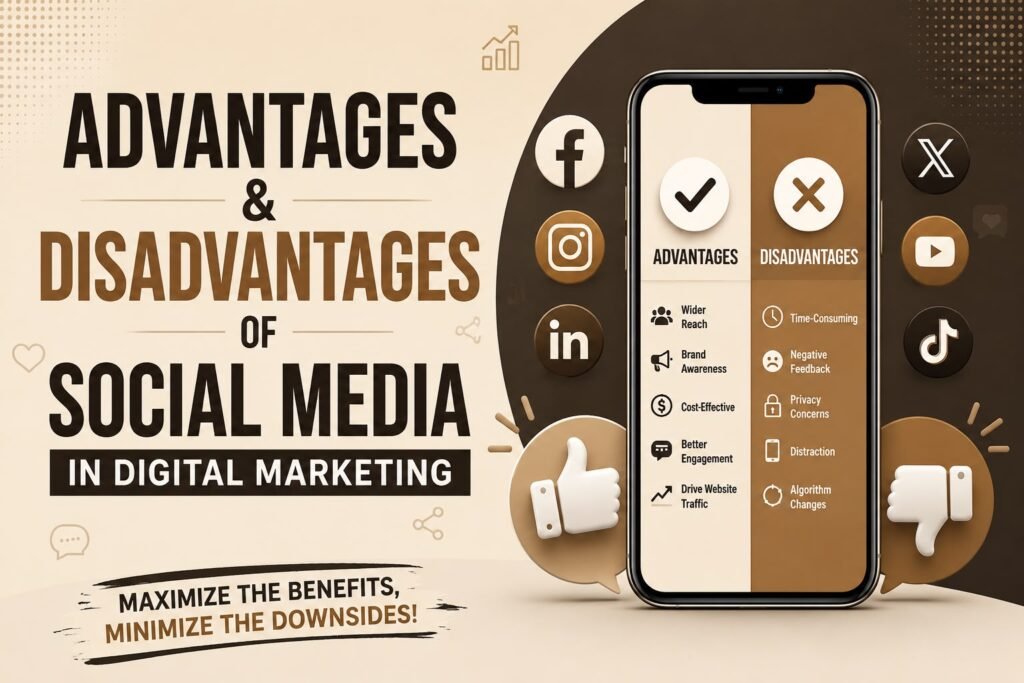
Advantages and Disadvantages of Social Media in Digital Marketing Introduction Social media has transformed the way businesses communicate with their customers. Platforms like Facebook, Instagram, LinkedIn, X (formerly Twitter), TikTok, and Pinterest have become powerful marketing tools that help brands connect with millions of users worldwide. Whether you’re a small business, startup, or established company, social media offers countless opportunities to promote products, build relationships, and increase brand awareness. However, while social media provides significant advantages, it also comes with challenges that businesses must understand and manage effectively. Knowing both the benefits and drawbacks of social media marketing can help businesses create smarter strategies and achieve better results. In this blog, we’ll explore the major advantages and disadvantages of social media in digital marketing. Advantages of Social Media in Digital Marketing Increased Brand Awareness One of the biggest advantages of social media is its ability to increase brand visibility. Millions of people use social media every day, making it easier for businesses to reach a large audience. By consistently posting valuable content and engaging with followers, brands can establish a strong online presence and become more recognizable. Regular interaction with customers also helps create trust, making people more likely to remember and choose your brand. Cost-Effective Marketing Compared to traditional advertising methods such as television, newspapers, or billboards, social media marketing is much more affordable. Businesses can create accounts for free and begin promoting their products without a large investment. Even paid advertising on platforms like Facebook and Instagram allows businesses to set flexible budgets, making it suitable for companies of all sizes. Better Customer Engagement Social media enables businesses to communicate directly with their audience. Customers can comment on posts, send messages, leave reviews, and participate in polls or live sessions. This two-way communication helps brands build stronger relationships with customers while improving trust and customer satisfaction. Businesses can also quickly respond to questions, complaints, and feedback, creating a positive customer experience. Highly Targeted Advertising One of the strongest features of social media advertising is advanced audience targeting. Businesses can display ads based on age, gender, location, interests, online behavior, and purchasing habits. This precise targeting ensures marketing budgets are spent on reaching the people most likely to become customers, improving conversion rates and maximizing return on investment (ROI). Increased Website Traffic Social media serves as an excellent channel for driving visitors to your website. Sharing blog posts, product pages, videos, and promotional offers encourages users to click through and learn more about your business. More website traffic often leads to increased leads, inquiries, and sales, especially when combined with strong content marketing strategies. Valuable Business Insights Most social media platforms provide analytics tools that help businesses understand audience behavior. Marketers can track metrics such as reach, impressions, engagement, clicks, follower growth, and conversions. These insights allow businesses to measure campaign performance and make data-driven decisions for future marketing strategies. Disadvantages of Social Media in Digital Marketing High Competition Since almost every business is active on social media, competition is intense. Standing out among thousands of posts requires creativity, consistency, and high-quality content. Without a unique strategy, businesses may struggle to attract attention and maintain audience engagement. Time-Consuming Successful social media marketing requires consistent effort. Businesses need to regularly create content, respond to comments, monitor messages, analyze performance, and stay updated with platform trends. Managing multiple social media accounts can become time-consuming, especially for small businesses with limited staff. Negative Feedback Can Spread Quickly While positive reviews build trust, negative comments can also spread rapidly across social media platforms. Poor customer experiences may become public and damage a brand’s reputation if not handled professionally. Businesses must actively monitor their accounts and respond quickly to customer concerns to minimize reputational risks. Constant Algorithm Changes Social media platforms frequently update their algorithms, affecting how content is displayed to users. A strategy that works today may become less effective after an algorithm update. Businesses must continuously adapt their marketing strategies to maintain visibility and engagement. Difficult to Measure Immediate Results Although social media provides many analytics tools, achieving meaningful business results often takes time. Building an engaged audience, generating trust, and increasing sales usually require long-term consistency. Businesses expecting immediate success may become disappointed if they don’t understand that social media marketing is a long-term investment. Risk of Privacy and Security Issues Social media accounts are vulnerable to hacking, fake profiles, phishing attacks, and data breaches. Businesses must implement strong security measures, including secure passwords, two-factor authentication, and careful account management. Protecting customer information is essential for maintaining trust and credibility. How to Maximize the Benefits of Social Media Marketing Businesses can reduce the disadvantages of social media by following a well-planned strategy. Creating valuable content, maintaining a consistent posting schedule, engaging with followers, monitoring analytics, and staying updated with industry trends can significantly improve marketing performance. It’s also important to combine social media with other digital marketing strategies such as search engine optimization (SEO), email marketing, content marketing, and paid advertising. This integrated approach creates a stronger online presence and delivers better long-term results. Conclusion Social media has become one of the most powerful tools in digital marketing. It offers businesses affordable promotion, stronger customer relationships, increased brand awareness, targeted advertising, and valuable performance insights. At the same time, businesses must be prepared to handle challenges such as high competition, changing algorithms, negative feedback, and the need for consistent content creation. The key to success is understanding both the advantages and disadvantages and developing a balanced strategy that aligns with your business goals. When used effectively, social media can help businesses grow their audience, build lasting customer relationships, and achieve sustainable success in today’s competitive digital landscape. Start your digital growth journey today—let’s work together!

Uncategorized

The Complete Guide to Building a Brand Online

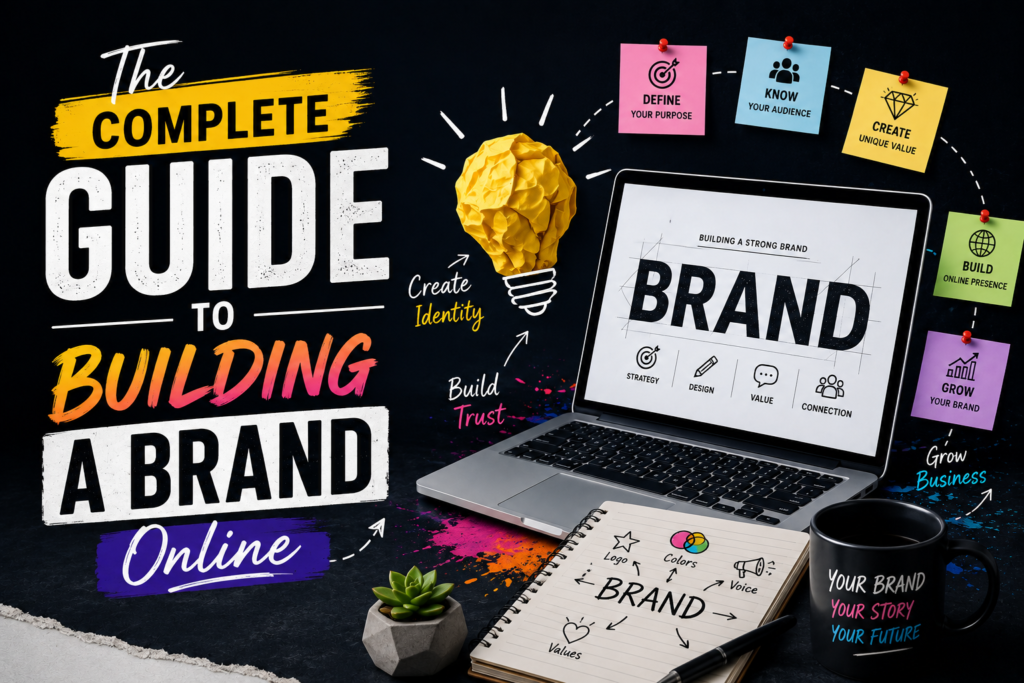
The Complete Guide to Building a Brand Online In today’s digital-first world, having a great product or service is no longer enough to stand out from the competition. Consumers are constantly exposed to thousands of brands online, making it essential for businesses to create a strong and memorable identity. A well-built online brand helps you gain trust, attract customers, increase loyalty, and drive long-term business growth. Whether you’re launching a startup, running a small business, or expanding an established company, building a brand online is one of the most valuable investments you can make. This guide will walk you through the essential steps to create a powerful online brand that connects with your audience and sets your business apart. What is Online Branding? Online branding is the process of creating and promoting a unique identity for your business across digital platforms. It involves everything from your logo and visual design to your messaging, website, social media presence, and customer experience. Your brand is not just what you sell—it’s how people perceive your business. A strong brand communicates your values, personality, and promise to customers. Successful online branding helps businesses: Increase visibility Build trust and credibility Create customer loyalty Differentiate from competitors Drive more leads and sales Step 1: Define Your Brand Purpose Every successful brand starts with a clear purpose. Ask yourself: Your purpose becomes the foundation of your brand and influences every decision you make. For example, some brands focus on affordability, while others emphasize quality, innovation, or sustainability. Defining your purpose helps customers understand what your business stands for. Step 2: Understand Your Target Audience You can’t build an effective brand without knowing who you’re trying to reach. Research your ideal customers and identify: Understanding your audience allows you to create messaging and content that resonates with them. When your audience feels understood, they are more likely to trust and engage with your brand. Understanding your audience allows you to create messaging and content that resonates with them. When your audience feels understood, they are more likely to trust and engage with your brand. Step 3: Create Your Brand Identity Your brand identity is how your business visually presents itself online. Key elements include: Logo Your logo is often the first thing people notice about your brand. It should be simple, memorable, and professional. Color Palette Colors influence emotions and perceptions. Choose colors that align with your brand personality. For example: Typography Select fonts that match your brand’s personality and maintain consistency across all platforms. Visual Style Use consistent imagery, graphics, and design elements to create a recognizable brand appearance. Consistency helps customers instantly identify your brand wherever they encounter it. Step 4: Develop a Strong Brand Message Your brand message communicates who you are and why customers should choose you. This includes: Brand Mission A clear statement explaining your purpose and goals. Brand Voice Your tone of communication should remain consistent. Examples: Unique Value Proposition (UVP) Your UVP explains what makes your business different from competitors. Ask yourself: “What unique benefit do customers receive from choosing my brand?” A compelling message helps customers connect emotionally with your business. Step 5: Build a Professional Website Your website serves as the digital home of your brand. A professional website should include: Your website should clearly communicate your brand identity and provide a seamless experience for visitors. A well-designed website builds credibility and encourages conversions. Step 6: Create Valuable Content Content is one of the most effective ways to build authority and trust online. Content marketing helps educate, inform, and engage your audience. Popular content formats include: Focus on solving your audience’s problems rather than constantly promoting your products. Valuable content positions your brand as an expert in your industry. Step 7: Establish a Strong Social Media Presence Social media platforms provide excellent opportunities to connect with your audience and increase brand awareness. Choose platforms where your target audience is most active. Popular options include: To build a strong social media brand: Social media helps humanize your brand and build meaningful relationships with customers. Step 8: Optimize for Search Engines (SEO) Search Engine Optimization (SEO) helps your brand appear when people search for relevant topics online. Effective SEO strategies include: When your website ranks higher on search engines, more people discover your brand organically. Increased visibility leads to more traffic, leads, and sales opportunities. Step 9: Build Trust Through Social Proof People trust recommendations and reviews from other customers. Social proof can significantly influence purchasing decisions. Examples include: Displaying positive feedback on your website and social media channels helps build credibility and confidence. The more trust you establish, the easier it becomes to convert prospects into customers. Step 10: Invest in Digital Advertising Organic growth is valuable, but digital advertising can accelerate brand awareness. Popular advertising platforms include: Digital advertising allows businesses to target specific audiences based on demographics, interests, and behavior. Well-optimized campaigns can quickly increase visibility and attract qualified leads. Step 11: Maintain Brand Consistency One of the biggest mistakes businesses make is inconsistency. Your logo, colors, messaging, tone, and overall experience should remain consistent across: Consistency builds recognition and strengthens your brand identity. Customers should have the same experience regardless of where they interact with your business. Step 12: Monitor and Improve Your Brand Building a brand is not a one-time task. It requires continuous improvement. Regularly analyze: These insights help you understand what is working and where improvements are needed. Successful brands adapt to changing customer needs and market trends. Common Online Branding Mistakes to Avoid Many businesses struggle with branding because they make avoidable mistakes. Some common errors include: Avoiding these mistakes can significantly strengthen your brand’s online presence. Conclusion Building a brand online requires more than creating a logo or launching a website. It involves developing a clear purpose, understanding your audience, creating consistent messaging, producing valuable content, and building trust through meaningful customer experiences. A strong online brand helps businesses stand out in competitive markets, attract loyal customers, and achieve sustainable growth.

Uncategorized

How Digital Marketing Can Increase Sales for Your Business

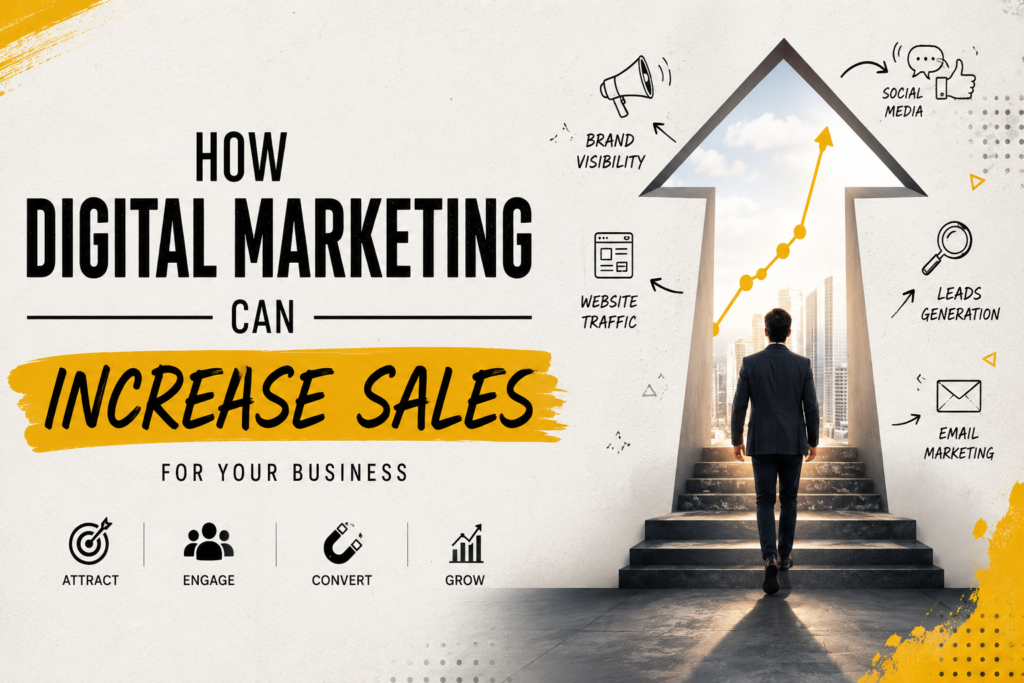
How Digital Marketing Can Increase Sales for Your Business In today’s fast-paced digital world, businesses can no longer rely solely on traditional marketing methods to attract customers and increase sales. Consumers now spend a significant amount of their time online—searching for products, reading reviews, engaging with brands on social media, and making purchasing decisions. This shift in consumer behavior has made digital marketing one of the most powerful tools for business growth. Whether you are a startup, a small local business, or a large company, digital marketing can help you reach the right audience, generate quality leads, and ultimately boost your sales. In this blog, we’ll explore how digital marketing can increase sales and why every business should invest in it. What is Digital Marketing? Digital marketing refers to the promotion of products or services through online channels such as search engines, websites, social media platforms, email, and online advertisements. Unlike traditional marketing, digital marketing allows businesses to target specific audiences, measure results in real time, and optimize campaigns for better performance. Some of the key components of digital marketing include: When these strategies work together, they create a powerful system that drives traffic, builds trust, and increases sales. Reach the Right Audience One of the biggest advantages of digital marketing is its ability to target the right audience. Traditional advertising methods often reach a broad audience, many of whom may not be interested in your products or services. Digital marketing, however, allows businesses to target customers based on: For example, a fashion brand can show advertisements specifically to people interested in clothing and fashion trends. This precise targeting ensures that marketing efforts reach potential customers who are more likely to make a purchase. The more relevant your audience, the higher your chances of generating sales. Increase Brand Awareness People are more likely to buy from brands they recognize and trust. Digital marketing helps businesses build visibility across multiple online platforms. Through consistent social media posts, engaging content, search engine presence, and online advertising, businesses can stay in front of their target audience. When customers repeatedly see your brand online, they become familiar with it. This familiarity increases trust and makes them more likely to choose your products or services when they are ready to buy. Strong brand awareness directly contributes to higher sales and long-term customer loyalty. Drive More Website Traffic Your website acts as your digital storefront. Digital marketing strategies such as SEO, content marketing, and paid advertising help attract visitors to your website. The more qualified traffic you receive, the more opportunities you have to convert visitors into customers. For example: A steady flow of targeted visitors increases the likelihood of generating leads and sales. Generate High-Quality Leads Not every visitor is ready to buy immediately. Digital marketing helps businesses capture potential customers and nurture them over time. Lead generation techniques include: Once a lead is captured, businesses can continue communicating through email campaigns, remarketing ads, and personalized content. By building relationships with potential customers, businesses can guide them through the buying journey and increase conversion rates. Build Customer Trust and Credibility Trust plays a major role in purchasing decisions. Consumers often research brands online before making a purchase. A strong digital presence helps establish credibility through: When customers see proof that others have had positive experiences with your brand, they feel more confident about buying from you. Trust reduces hesitation and increases the likelihood of sales. Improve Customer Engagement Digital marketing creates opportunities for two-way communication between businesses and customers. Social media platforms allow brands to: Engaged customers are more likely to become loyal customers. They also tend to recommend businesses to friends and family, creating additional sales opportunities through word-of-mouth marketing. The stronger your relationship with customers, the higher your chances of repeat purchases. Use Data to Make Better Decisions One of the greatest benefits of digital marketing is the ability to track and measure results. Businesses can analyze data such as: These insights help businesses understand what works and what doesn’t. Instead of guessing, companies can make data-driven decisions that improve campaign performance and maximize sales results. Boost Sales Through Social Media Marketing Social media has become a powerful sales channel. Platforms like Instagram, Facebook, LinkedIn, and YouTube allow businesses to connect directly with potential customers. Through engaging content, promotions, and targeted advertising, brands can encourage users to take action. Effective social media marketing helps businesses: A strong social media strategy can significantly impact overall sales growth. Increase Conversions with Paid Advertising Paid advertising delivers quick and measurable results. Platforms such as Google Ads and Meta Ads enable businesses to reach customers who are actively searching for products or services. Benefits of paid advertising include: Well-optimized advertising campaigns can produce a strong return on investment and accelerate business growth. Encourage Repeat Purchases Acquiring new customers is important, but retaining existing customers is often more profitable. Digital marketing helps businesses maintain relationships with customers through: By staying connected with customers after a purchase, businesses can encourage repeat sales and increase customer lifetime value. Conclusion Digital marketing is no longer an optional business strategy—it is a necessity for growth in today’s competitive marketplace. By reaching the right audience, increasing brand awareness, generating quality leads, building trust, and leveraging data-driven insights, businesses can significantly improve their sales performance. Whether you’re a local business, startup, or established brand, investing in digital marketing can help you attract more customers, strengthen your online presence, and achieve sustainable growth. The businesses that embrace digital marketing today will be the ones that thrive tomorrow. If your goal is to increase sales, expand your reach, and grow your business, digital marketing is one of the most effective investments you can make. 🚀 Grow Your Brand. Increase Your Sales. Achieve Real Results.

Scroll to Top